Dance Technique Guide

Chandan Singh
| 28-04-2026
 · Art Team
Dance is more than a sequence of movements—it is a language of the body.
Every step, turn, and gesture carries meaning, emotion, and intention.
While passion and creativity are essential, dancers also rely heavily on technical skills to perform with clarity and control. By understanding the principles behind alignment, movement quality, and expressive performance, dancers can elevate both their technique and their artistic voice.
Building a Strong Technical Foundation
A solid technical foundation is the backbone of every successful dancer. Regardless of whether someone studies ballet, contemporary, hip hop, or ballroom, strong fundamentals allow dancers to perform movements safely and efficiently. Proper training ensures that movements are executed with balance, strength, and precision.
Technical skills also provide consistency. When dancers develop reliable body control and coordination, they gain the freedom to focus more on creativity and performance rather than simply trying to maintain stability or accuracy during movement.
Alignment, Posture, and Movement Quality
Proper alignment refers to how the body is positioned during movement. The feet, knees, hips, shoulders, and head should work together in a coordinated structure that supports balance and reduces strain. Good alignment allows dancers to move smoothly while minimizing the risk of injury.
Posture plays a major role in generating energy and maintaining control. A lifted spine and engaged core provide stability, while movement quality describes how the body travels through space. Fluid, controlled motion combined with clear precision creates visually appealing and expressive dance performance.

Essential Training Exercises
Several classic exercises help dancers strengthen technique. Pliés involve bending the knees and lowering the body, improving balance, flexibility, and strength. Tendus stretch the foot outward while maintaining a straight leg, developing control and coordination.
Battements involve lifting the leg off the floor and holding it briefly in position. These movements strengthen the legs and build control in the hips and core, helping dancers execute larger and more powerful movements with confidence.
Improving Flexibility and Strength
Flexibility is essential for graceful movement and an extended range of motion. Regular stretching exercises, such as hamstring stretches, quadriceps stretches, and hip flexor stretches, help maintain mobility and prevent stiffness during demanding choreography.
Strength training supports stability and control. Exercises such as squats, lunges, and leg presses help develop muscular endurance, while coordination drills train the body to move arms and legs in different rhythms and patterns simultaneously.
Correcting Common Technical Mistakes
Even experienced dancers encounter technical challenges. Poor alignment is one of the most common problems, often leading to unstable movement or increased risk of injury. Correcting alignment usually involves engaging the core and maintaining a long, balanced spine.
Other common issues include insufficient turnout and lack of control. Turnout refers to the outward rotation of the legs and hips, which is important in many dance styles. Improving muscle engagement and practicing controlled movements helps dancers refine their technique and prevent sloppy execution.
The Power of Expression in Dance
Technical precision alone cannot fully communicate the meaning of a dance. Expression allows dancers to transform movement into storytelling. Through expressive gestures, body language, and emotional energy, dancers connect their movements to deeper artistic themes.
Interpretation also plays a critical role in performance. By understanding the story or emotional message behind choreography, dancers can deliver performances that resonate with audiences and bring choreography to life.
Ways to Strengthen Expression
One effective strategy is connecting closely with the music. By listening carefully to rhythm, melody, and mood, dancers can allow the music to guide their movement choices and emotional expression.
Visualization techniques can also help. Imagining specific emotions, images, or narratives allows dancers to project authentic feelings through their movements. Adjusting dynamics—such as varying speed, intensity, and energy—adds contrast and depth to performances.
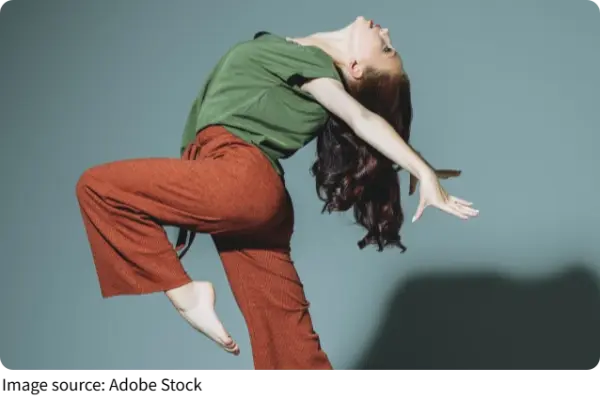
Expression Across Dance Styles
Different dance styles use expression in unique ways. Ballet often emphasizes dramatic storytelling and emotional depth, while contemporary dance highlights personal emotion and physical exploration.
Other styles focus on different expressive qualities. Hip hop emphasizes attitude, rhythm, and energy, while ballroom dance showcases elegance, partnership, and smooth coordination between dancers.
Conclusion
Mastering dance requires both technical discipline and artistic expression. Strong alignment, posture, and movement control provide the physical tools necessary for confident performance.
When dancers combine solid technique with emotional connection and musical interpretation, their performances become far more powerful. Through continuous practice and thoughtful expression, dancers can transform simple movement into meaningful artistic communication.